Silent Suffering: The Hidden Crisis of Sexual Misconduct at UK Universities
The 2023 Office for Students survey reveals alarming statistics about unwanted sexual behaviours at university, exposing that most incidents go unreported, leaving students unsupported and the perpetrators free.


For so many bright-eyed, bushy-tailed students, university is the first step towards becoming someone new. It’s the road they have long dreamed of that leads to success and new beginnings. A fresh start, lifelong friendships, and freedom they have never known. However, a 2023 Office for Students survey found that 20% of those students will experience sexual misconduct whilst at university, harshly diminishing their success and glory.
The study covered a variety of students at selected English universities from September 2022 to September 2023, looking at the types of misconduct faced, the demographic breakdown, impacts on wellbeing, and how universities reacted and supported students. The types of sexual misconduct recorded were sexual harassment, which included catcalling and unwanted comments, unwanted physical contact, and sexual assault. Of these, sexual harassment was the most common, with 40% of the female students experiencing this.
Perhaps most shockingly, 1 in 10 students reported having been sexually assaulted during their time at university, and 2% reported being raped. It was found that there is a disproportionate impact on female students, who reported a much higher rate at 27%, compared to male students at 12%, meaning women are over 2 times more likely to experience sexual misconduct as a student. Of the male and female respondents, groups within these experiencing a higher rate of unwanted sexual behaviours included disabled students at 32%, bisexual students at 37%, and gay/lesbian students at 34%.
The Underreporting Epidemic
It’s undeniable that students are notoriously taken advantage of in society; young, potentially naive, and often poor, they can be seen as easy prey. Whether by landlords, managers, or someone else entirely, they often lack the life experiences and money to navigate difficult situations. This is why it’s incredibly important for universities to make students aware of the support they can offer or situations that can arise.
Student A was a victim of verbal sexual misconduct and one instance of physical misconduct from her male boss whilst she was a student, and said it definitely impacted her time there. She said: “He would often make comments about my figure and call me words such as “slut” and “whore” and just in general make inappropriate comments at not only me but other younger girls at my workplace. On one occasion I was in the back of the shop alone and I was leaning over the counter when he slapped my bum unprovoked.”
69% of students said that they didn’t report the incident to their university; in a similar survey, Revolt Sexual Assault and The Student Room found that only 2% of students who experienced sexual violence and reported it to their university felt satisfied with how it was handled.
It’s indisputable that incidents going unreported hide the alarming rate at which they’re occurring, and prevent students from receiving proper help and support. But why aren’t students reporting these incidents?
“I wouldn't have even thought about going to university about it because I wouldn't have even known who in university could have helped with something like that. Also, I felt it wasn't a valid enough reason to apply for external circumstances and I was slightly embarrassed about the situation. I definitely regret this as it probably had an impact on my overall grades and I probably could have found some sort of mental health help.”
The University of Lincoln has a YouTube video on knowing if you're a victim, how to access support, and what support is available. If more universities had easily accessible information would students feel safer coming forward?

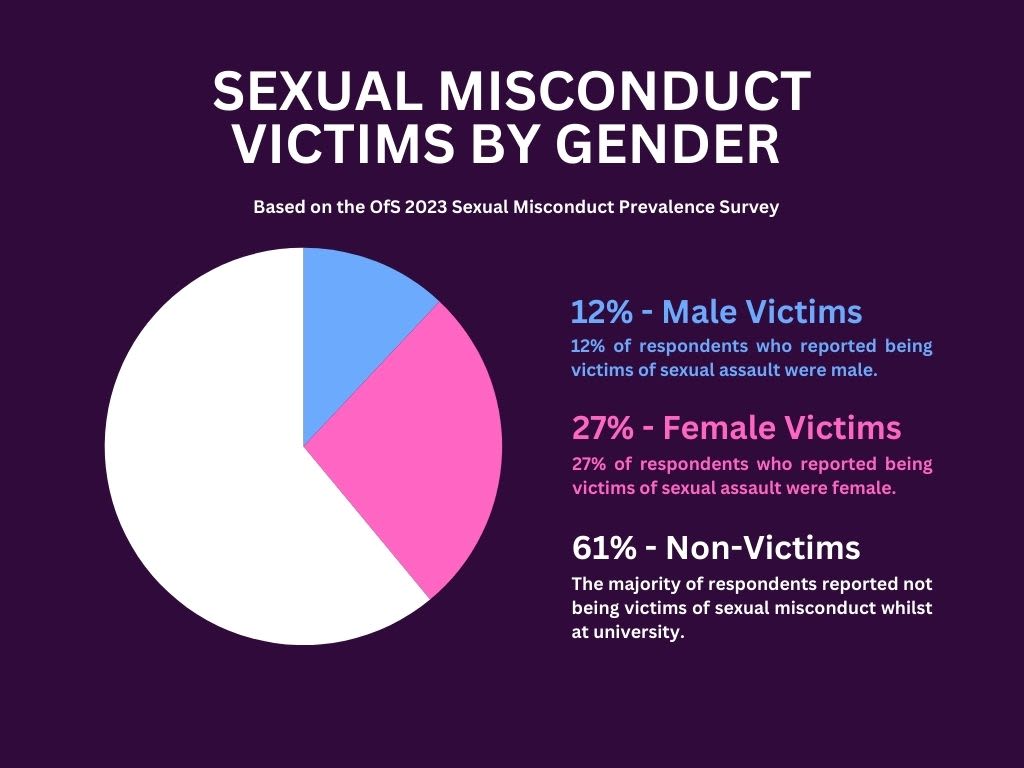
The OfS sexual misconduct prevalence survey showed a disparity between male and female victims.
The OfS sexual misconduct prevalence survey showed a disparity between male and female victims.
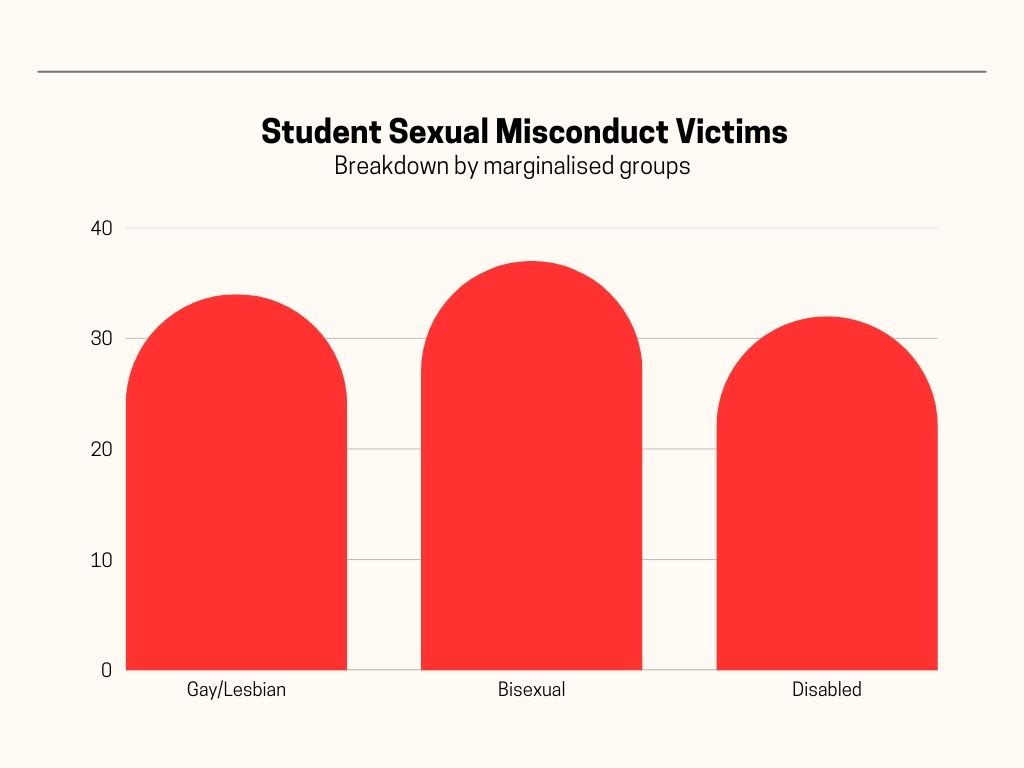
It was found that a staggering amount of victims belong to marginalised groups.
It was found that a staggering amount of victims belong to marginalised groups.
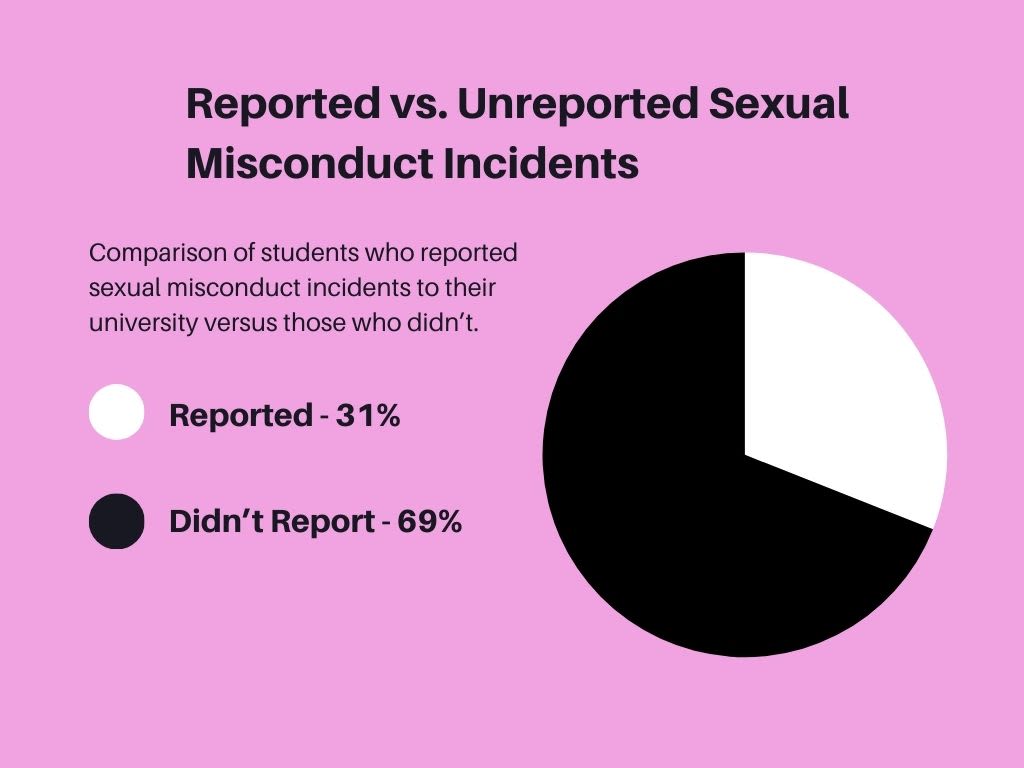
Almost 3/4 of student victims didn't report the incident to their university.
Almost 3/4 of student victims didn't report the incident to their university.
University Responses & Institutional Failures



Data from the University of Essex (pictured) was included in the survey for this investigation.
Data from the University of Essex (pictured) was included in the survey for this investigation.
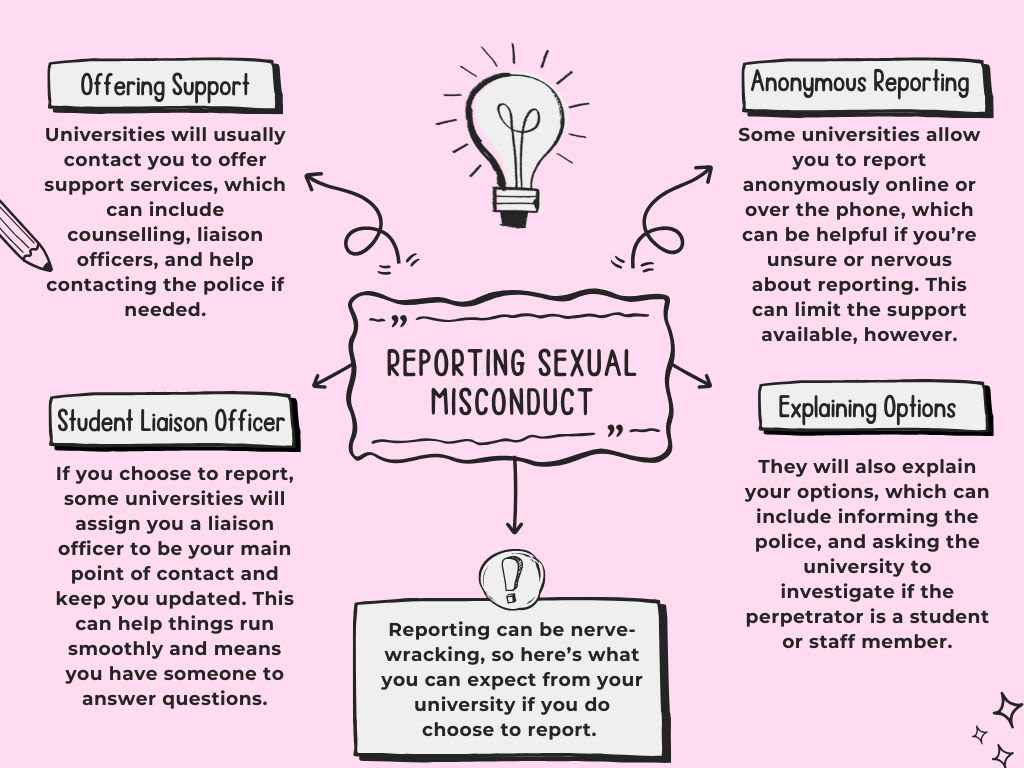
What you can expect from your university if you report an incident of sexual misconduct.
What you can expect from your university if you report an incident of sexual misconduct.
Universities’ responses to sexual misconduct have been under intense scrutiny, with different organisations constantly reviewing and updating guidelines. In May 2024, Universities UK collaborated with Coventry University and Pinsent Masons to publish updated guidance on tackling sexual misconduct on university campuses. This guidance mainly focused on the investigation and disciplinary process of sexual misconduct, and how to make sure students are clear about this. Whilst this process is incredibly important, the handling of emotions and trauma is where universities are failing. A significant barrier to addressing misconduct is the lack of effective reporting mechanisms. The NUS and 1752 Group’s report revealed that less than 10% of students who experienced staff-related misconduct reported it to their university, often because of fear of disbelief or unsatisfactory support. This can be worsened by insufficient staff training and failure to create a safe reporting environment, deterring victims from coming forward.
Student B was a victim of verbal harassment; catcalling whilst on campus. She revealed it made her feel uncomfortable, anxious, and self-conscious, especially when alone. When asked about her experiences reporting it, she revealed: “I wasn’t sure what to expect, but I felt it was important for them to know what had happened. I was able to speak to someone about counselling. [...] It was okay, but I felt like I had to push for more help in some areas.”
“I think universities could definitely benefit from more options to stay anonymous, especially in the initial stages. Sometimes, students are scared to report because they don’t want to deal with the stigma.”
Several universities were reached out to for comments on their reporting and support process, but none had responded at the time of publishing.
“To prevent sexual misconduct, universities need to do a better job of educating students. It’s not just about telling people it’s wrong, but teaching them why. Workshops, awareness, and even student-led campaigns could make a difference and encourage bystanders to intervene and create a sense of community and accountability.”
The findings from the OfS survey expose a dangerous reality; sexual misconduct is rampant in higher education yet remains hugely underreported, with extremely low support satisfaction rates of 2% from those who do. The emotional, psychological, and academic toll of sexual misconduct is debilitating. To break this cycle, universities should look at their approaches to handling sexual misconduct, including more comprehensive training, establishing clear, confidential reporting procedures, and creating an environment where students are highly aware of options and have genuine support. By centering victim support rather than discipline, universities can begin to rebuild trust between themselves and victims. Until these changes are made, students will remain vulnerable, their voices unheard, and the cycle of silence and suffering will remain hidden.
 Built with Shorthand