
Stamina, discipline and determination – How cheerleaders are changing the narrative


With the tenth World Championships taking place last month, these athletes are showing the world how sport is really done


Olympic Dreams
In 2021, cheerleading was given full recognition by the International Olympic Committee. But despite a 12-year campaign from the International Cheer Union, there is still no clear path for the sport to become part of the games.
Hope was initially pinned on a 2028 Los Angeles debut, but it failed to make the shortlist, with its complex scoring system thought to be one of the reasons why.
Katie Burgess, a coach for Inferno Cheer & Dance in Cardiff, has been competitively cheering since she was nine years old.
Ms Burgess, who also competes for Inferno's senior team Ladies Ignite, said: “Cheerleaders all over the UK, and the world, are doing everything they possibly can to help us become recognised as an Olympic sport.”
She added that it was “unthinkable” that cheerleading is not a part of the Olympics.
A tweet by the International Cheer Union after being granted Olympic recognition by the International Olympic Committee. Tweet: ICU
Gravity defying
The sport has grown immensely since its invention over 100 years ago. Once just a lone student leading the crowd in a chant cheerleading is now an elite sport. The types of cheerleading range from scholastic squads to All-Star competitive teams. Athletes of all abilities can take part, with some teams training cheerleaders as young as age three.
It requires a huge amount of resilience, stamina, and complex skills that can take years to perfect. But despite the dedication put in by the 7.5 million cheerleaders around the globe, there is still a view that it is not a sport. Many people still have a perception of it being high school girls standing on the sidelines cheering for team sports like football and basketball.
Films such as Bring It On and American Beauty added to this narrative by portraying cheerleaders in this way. But what we have seen in the media is far from the reality of the diverse teams that are taking the sport to the next level.
In 2020, Netflix released the documentary 'Cheer' which aimed to turn perceptions on its head, giving an insight into how much hard work is put in by the athletes. This award winning program gave a different view into the world of cheerleading, showing it is a serious sport.
Inferno Cheer & Dance athletes practice difficult stunts. Instagram @infernocheer.dance
The highly intense routines, including dance and acrobatics, see flyers thrown into the air in gravity-defying stunts. These stunts require a great deal of trust and synchronicity. The sport also fosters an attitude of empowerment, support, and camaraderie amongst its athletes, giving the cheerleaders lifelong skills they can use both on and off the floor.
Fastest growing sport
Cheer has seen a huge rise in popularity in the UK. According to a recent report from Sport Cheer England, it is one of the fastest growing sports in the country, with many schools now offering it as an extra-curricular P.E. lesson.
Almost 90,000 athletes across the UK participate at recreational community, competitive, and elite levels. It is also said to be a critical sport in promoting the physical and mental well-being of a key demographic in the UK, as 96 percent of cheerleaders are thought to be female.
Cheerleading facts. Infographic: Jules Millward
In April 2024, squads across the UK, along with national teams for the devolved nations, took part in the ICU’s World Cheerleading Championships where 500 teams from 25 different countries competed for titles in their respective divisions. Competition is fierce, and it is no mean feat to secure a medal.
Team Wales are the Adaptive Abilities 2024 World Champions. Instagram: @teamwalescheeranddance
This year’s competition put the UK firmly on the map with significant wins across the homegrown teams. Team Wales became the World Champions for the Adaptive Abilities division, taking home gold, along with England who won gold, silver, and bronze medals in their respective divisions.
“That’s what makes us Inferno”
Inferno Cheer & Dance coaches training their minis team for their next competition. The dedication they put into coaching is inspiring. Instagram via @this_is_jools_
Cardiff team Inferno Cheer & Dance embodies the spirit of cheerleading. They receive no funding for the team, and the coaches volunteer their time, fitting multiple training sessions in around their full time jobs.
The four coaches, who have cheered alongside each other since they were children, have dedicated the past ten years to building a cheer team that is inclusive and welcoming. Coach Katie Burgess said of the team: "We've got that family vibe."
She added: We’ve always opened our doors to everyone that wants to join, and everyone gets a space on the team."

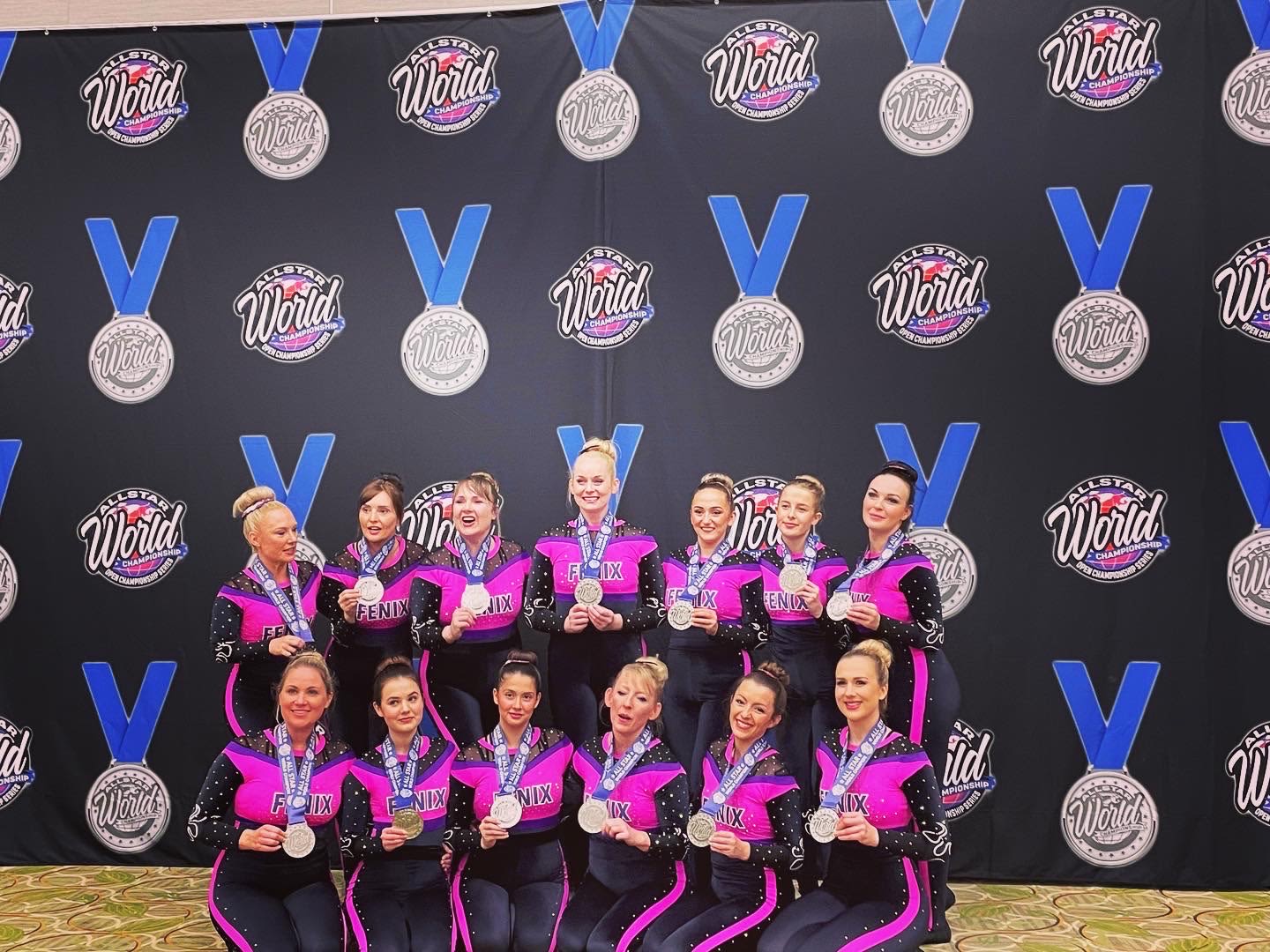
Inferno Cheer & Dance team Fenix won a silver medal at the 2023 Cheerleading World Championships. Photo: Katie Burgess
Inferno Cheer & Dance team Fenix won a silver medal at the 2023 Cheerleading World Championships. Photo: Katie Burgess
Their accolades include taking home the silver medal at the World Championships in Florida last year, and two of their very own athletes competed with Team Wales in last month’s competition.

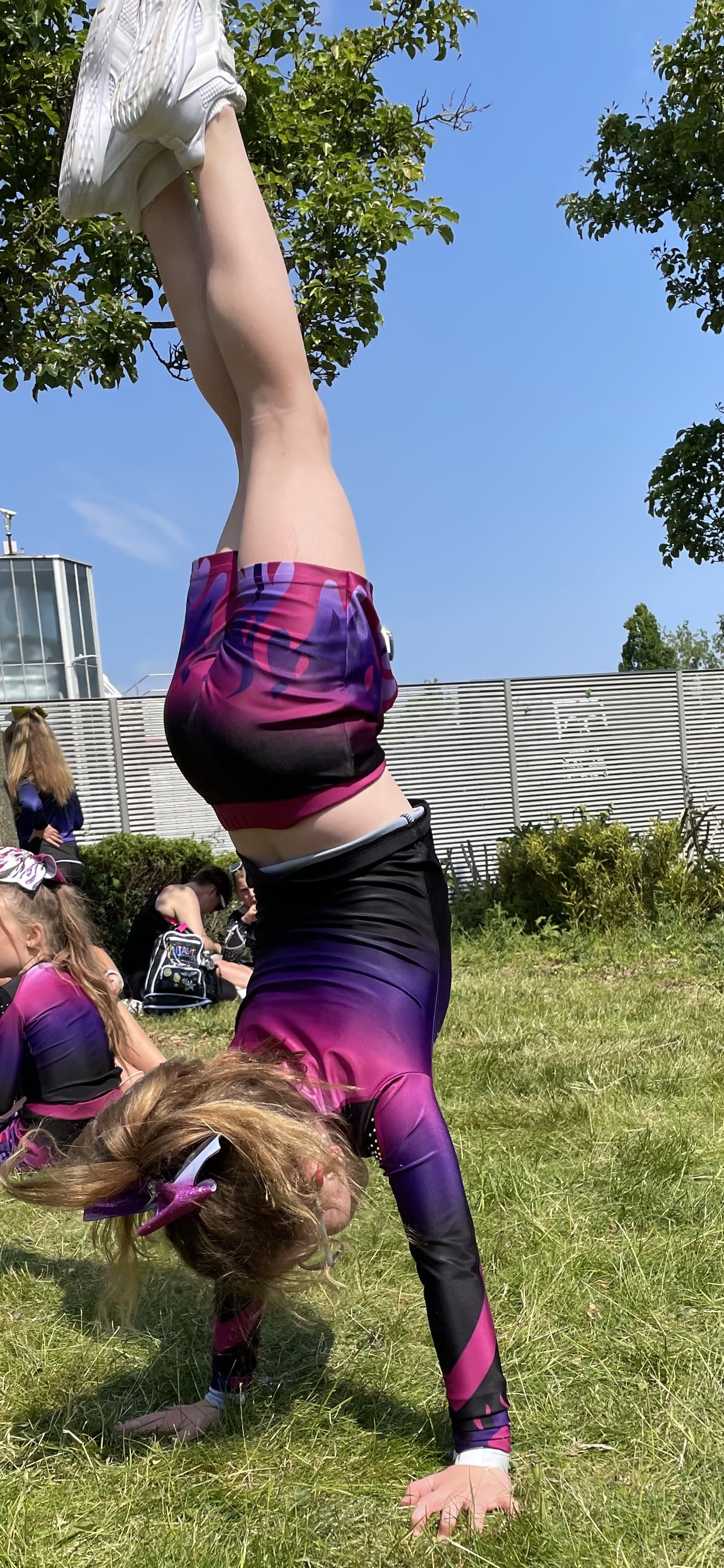
A cheerleader practices her stunts. Photo: Jules Millward
A cheerleader practices her stunts. Photo: Jules Millward
Nicola Adams, who is stepping back from competing but still dedicates her time to coaching said: “That feeling you get on the floor…it’s nice for us to help the kids get that.”
The positivity and belief that the Inferno coaches give to their athletes captures the spirit of cheerleading, and the team continues to build on their wide range of skills. Their focus isn't on competition but on support and teamwork which in turn translates into successful routines.
Inferno coach Katie Burgess answers questions on cheerleading. #cheerleading #cheer #sport #elitesport #teamwork #cheerfamily #infernocheer #flyhigh Video: Jules Millward
Lucy Pottinger, whose daughter has been competing with Inferno for three years said: “It’s not about the winning but supporting teammates and other teams.
“I like the positivity of the coaches, their support, and how they encourage the girls to do their best while making it fun.”
She added: “The greatest pride comes when I’m watching her perform in front of complete strangers…it’s building skills for adult life and resilience.”
“Yell leaders” - A cheer history
Cheerleading made its debut in the 1860s. Students from the UK were the first to cheer for athletes at sporting events, and soon after, the concept travelled to America, where a student from Princeton University came up with the original ‘Sis Boom Rah’ chant.
This travelled to Minnesota and in 1898 medical student Johnny Campbell was the first to lead the crowd in an organised cheer, and cheerleaders were born, and were known as 'yell leaders.'
Although women were allowed to join the University of Minnesota’s cheer team in the 1920s, it wasn’t until World War two that other Universities followed suit.
They brought dance and gymnastic routines to their teams, setting the scene for the complex and breath-taking routines we see today.

 Built with Shorthand