
Surviving vs Thriving:
The hidden hunger eating away at Zambia’s potential
Not one but two National Heroes Stadiums are packed to maximum capacity. Over 120,000 Zambians waiting for the game to start, with thousands more queuing to get in. The catch? There is no game. Not for 4% of the nation’s children below the age of 5, whose bodies are literally wasting away in one of the most resource-rich countries in the world. Starving children filling Zambia’s great stadium 2.1 times over. If they survive, they will join 32% of their countrymen whose physical growth and cognitive development have lagged because they didn’t consume enough vital nutrients during critical periods in their lives (stunting). As adults, they will be expected to become productive members of an increasingly demanding yet unforgiving society, with little understanding for the challenges they face.
One of the severest droughts in Zambia’s history has made an already bad situation worse, with President Hichilema declaring a national disaster in February 2024. Although no lives were lost to hunger because of the drought—thanks primarily to donor support—the consequences of prolonged periods of malnutrition are themselves extremely grave. Unfortunately, such scenarios are not new for Zambia.
Projected IPC Acute Food Insecurity MaP and Population Table (October 2025-March 2026)
Projected IPC Acute Food Insecurity MaP and Population Table (October 2025-March 2026)
Quantity vs Quality
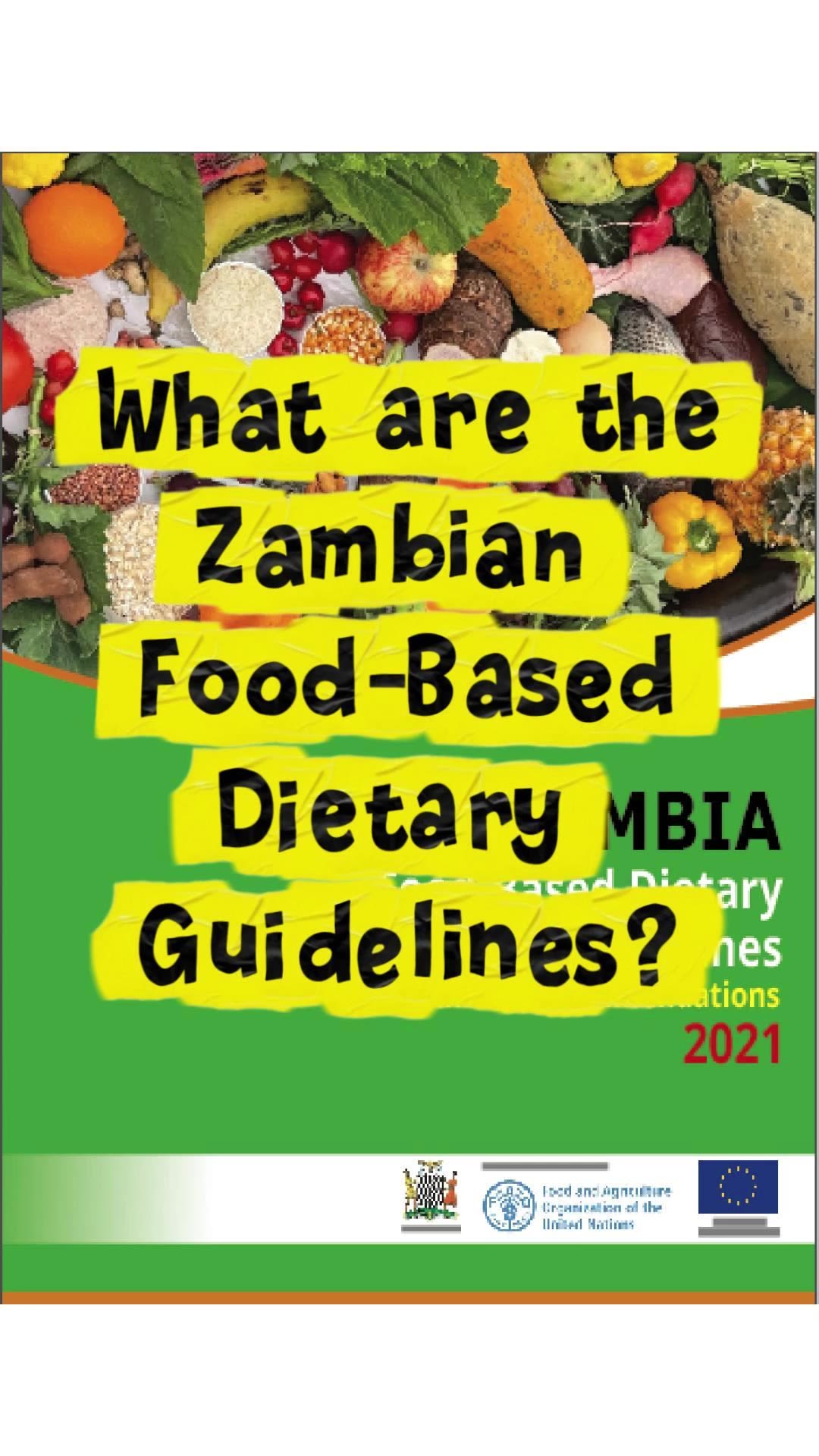
Dr Mercy Chikoko, the Food and Agriculture Association (FAO) Nutrition Officer leading the development of Food-Based Dietary Guidelines (FBDGs) for Southern Africa, described the nutrition landscape in Zambia as complex: “On one hand, there's malnutrition, which is because of not eating enough food or in right quantities. And on the other hand, others are facing rising levels of obesity and other related diseases, because of eating quite a lot of food, or maybe foods that do not have enough nutrients.”
It is not enough for people to simply have adequate quantities of food to eat; its quality is just as important.
“Micronutrient deficiency is a hidden hunger, so people don't see the direct effect of that because when a micronutrient deficiency symptom manifests, it means it is very severe,” said Dr Chikoko. “It affects the brain. It affects the eyes. It affects the thinking. It affects even the energy the person has. These are outcomes that manifest at school or work level that people don't see as related to nutrition,” she added.
"Unfortunately, once a child is stunted, the consequences are lifelong. So for example, the brain development, the cognitive development is affected. That is irreversible. So, no matter how good the schools or the teachers are going to be, that 30% [of stunted children] is going to struggle," said Dr Chikoko. Photo: (c) Katarina Zeravica
"Unfortunately, once a child is stunted, the consequences are lifelong. So for example, the brain development, the cognitive development is affected. That is irreversible. So, no matter how good the schools or the teachers are going to be, that 30% [of stunted children] is going to struggle," said Dr Chikoko. Photo: (c) Katarina Zeravica
Zambia’s first comprehensive Food Balance Sheets for the period 2019-2023, which detail the national nutrition landscape by including more than just the starchy staple foods historically deemed most vital to food security, reveal a population riddled with dietary deficits.
The average kilograms of food supply per person per year was lower in Zambia than global estimates for all the major food groups except for starchy roots.
While the average calories consumed per person per day were enough to meet the minimum recommended by the World Health Organization (WHO), 95.4% of the total dietary energy supply came from plant-based foods, 71.5% of which was from nutrient-scarce cereals and starch roots, like nshima and cassava.
The overall daily supply of proteins per person was about 49.4 grams (g), well below the 80-120 g recommended for an active adult weighing 70 kilograms (kg). The average fat supply per person was 51.7 g, also below the 66-100g recommendations for active adults.
The average calcium and potassium supplies were only enough to meet the needs of infants, but nowhere near the recommended levels for children, adolescents, adults, and pregnant and breastfeeding women. Iron supply was insufficient for women of reproductive age, while zinc requirements were not met for anyone over the age of 9.
Vitamin B2 was insufficient for adolescents and adults, while vitamin B1 was insufficient for pregnant and breastfeeding women. On average, vitamin A supply was below the recommended dietary allowance for all ages, while vitamin C exceeded the required intake. Vitamin PP (B3) and vitamin B9 (folate) intake was adequate.
Money vs Meals
The high cost of certain foods is a major hurdle most Zambian’s face when it comes to eating a balanced diet.
“Healthy food can be too expensive,” said Dr Mercy Chikoko. “When we went into communities to test the FBDG messages in Zambia, including to eat animal-sourced food, some of the community members actually laughed, saying they only eat these foods during Christmas because it’s simply not affordable,” she added.
With the cost of living at an all-time high, and the current minimum wage of a general worker meeting only 19.5% of a monthly needs basket for a family of 5, an over-reliance on cheaper but less nutritious starchy food is inevitable.
What is not inevitable however, is for this situation to remain unchanged.
Eating vs Economics
Since coming into power, the current government has more than doubled the nutrition budget allocation from K7.72 billion in 2021 to K16.0 billion in 2025. However, nutrition spending as a share of total government expenditure dropped from 8.4% in 2021 down to 7.4% in 2025 and dropped as a share of GDP from 2.7% to 2.0% over that same period. Although the government made a public pledge to spend US$30 on nutrition interventions annually per child under 5, current spending hovers around US$9.
Size and trends of the Zambian Nutrition Budget, 2021–2025 (K ’billion) (Source: UNICEF Nutrition Budget Brief 2025)
Size and trends of the Zambian Nutrition Budget, 2021–2025 (K ’billion) (Source: UNICEF Nutrition Budget Brief 2025)
According to Dr Chikoko, the scale of impact nutrition has on national development is not well understood.
“We often think that malnutrition is a health issue, but it's an economic issue mainly,” she said, adding that “Globally, it costs the world about $3.5 billion, and in many African countries, losses can be several percentages of growth, up to 10% of the GDP, depending on the rate of malnutrition, because people are less productive and more likely to get sick.”
Source: Mckinsey Health Institute
Source: Mckinsey Health Institute
This is illustrated by the relevance nutrition has on achieving the 17 global Sustainable Development Goals (SDGs).
“If we don't address malnutrition, we will not be able to reach 12 SDGs—not just one, but 12 SDGs because of malnutrition,” said Dr Chikoko.
Source: Scaling Up Nutrition (SUN)
Source: Scaling Up Nutri7on (SUN)
She believes the solutions to this complicated scenario are targeted policy commitments: “It’s possible to reduce malnutrition if we work in a multifaceted way and with very high impact interventions. It’s quite an important economic development issue that needs to have primary focus. It just takes the commitment of policy makers to make those changes.”
 Built with Shorthand